
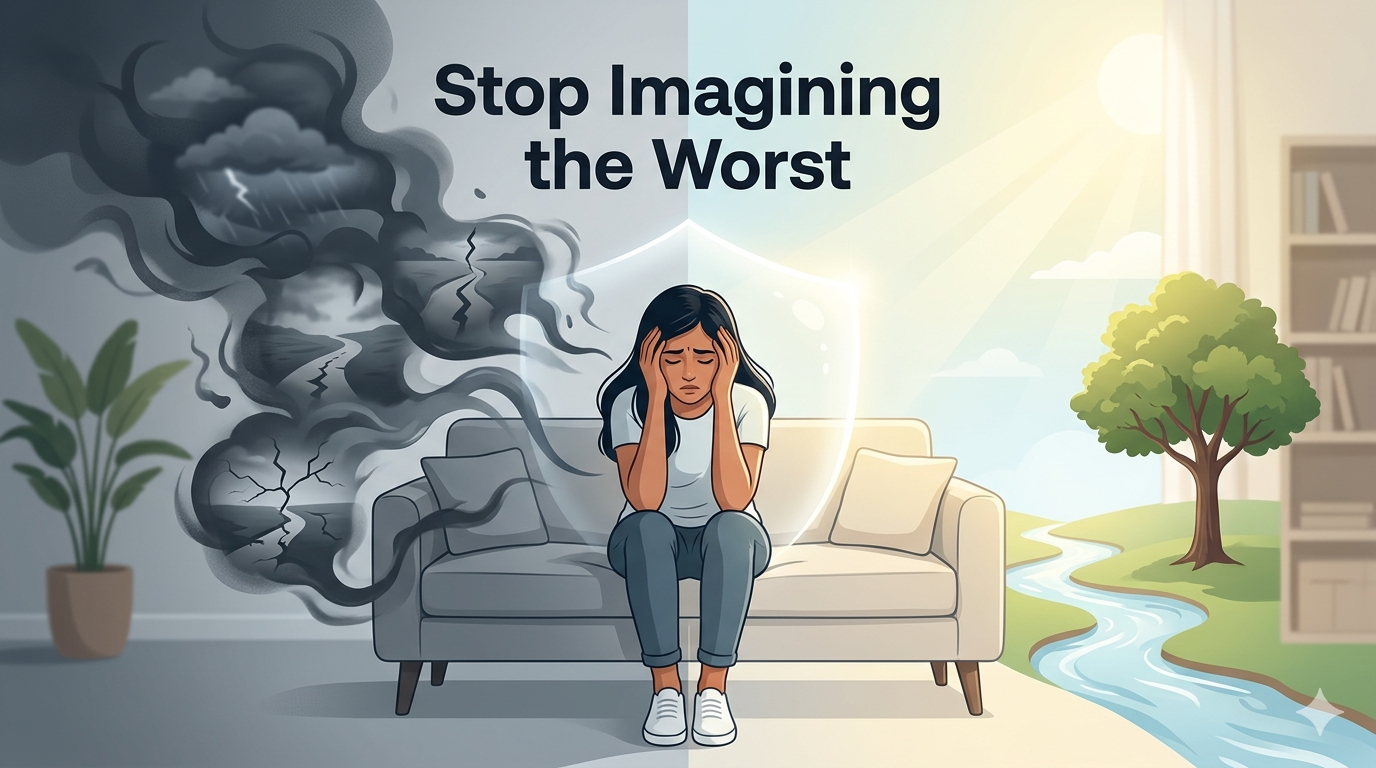
How to stop overthinking and negative thoughts, anxiety overthinking symptoms, why my mind creates negative future scenarios, constant overthinking problem solution. I request you to read this complete article for better understanding of The Truth About Anxiety & Negative Thinking.
Why do I imagine worst case scenarios all the time
Have you ever noticed this pattern?
Nothing bad has actually happened… but your mind keeps creating negative stories about the future. One thought turns into ten. A small worry becomes a disaster in your head.
If this feels familiar, you’re not alone.
This mental pattern is commonly linked to overthinking and anxiety, where your brain constantly imagines worst-case scenarios—even when there is no real danger.
This guide will help you understand:
- Why your mind does this
- The hidden pattern behind overthinking
- And most importantly, how to stop it naturally
What Is This Mental Pattern Called?
When your mind keeps imagining negative outcomes that haven’t happened, it is usually a mix of:
- Overthinking (thinking too much about one thing)
- Worst-case thinking (catastrophizing)
- Future anxiety
Your brain is trying to “protect you” by predicting danger—but instead, it creates stress and fear.
Signs You Are Stuck in an Overthinking Loop
1. You Think About the Same Situation Again and Again
Even after the moment is gone, your mind keeps replaying it.
2. You Imagine Negative Outcomes Without Evidence
You assume things will go wrong—even when there’s no proof.
3. Your Thoughts Escalate Quickly
A small thought becomes a big fear within seconds.
Example:
“One problem” → “Everything will go wrong” → “My future is ruined”
4. You Feel Mentally Exhausted
Even without doing physical work, your brain feels tired.
5. You Struggle to Stay Present
Your focus is always on “what if” instead of “what is”.
Why Your Mind Creates Worst-Case Scenarios
1. Your Brain Is Trying to Protect You
Your mind is designed to detect danger. It prefers to assume the worst so you can stay “prepared.”
But in modern life, this response becomes excessive.
2. Lack of Control Increases Anxiety
When you feel uncertain about the future, your brain tries to “predict everything.”
This leads to overthinking loops.
3. Past Experiences Influence Present Thoughts
If something negative happened before, your mind uses it to create future fears.
4. Overuse of Social Media and Information
Constant exposure to negative news and comparison increases fear-based thinking.
5. Poor Sleep and Lifestyle Habits
Lack of rest weakens your mental clarity and increases anxious thinking.
The Hidden Pattern of Overthinking (Understand This Carefully)
Overthinking usually follows this cycle:
- A small trigger (message, situation, thought)
- “What if” thinking starts
- Worst-case scenario imagined
- Emotional stress increases
- Mind searches for more problems
- Loop repeats
👉 This is not reality—it’s a mental habit.
How to Stop Overthinking and Negative Future Thoughts
1. Ask Yourself: “Is This a Fact or a Fear?”
This is the most powerful question.
- Fact = real evidence
- Fear = imagination
Most of your thoughts will fall under “fear”.
2. Break the Thought Loop Immediately
Don’t let the thought continue.
Do something physical:
- Walk
- Drink water
- Change your environment
3. Limit “What If” Thinking
Instead of:
“What if everything goes wrong?”
Ask:
“What if things go right?”
Train your brain to see balanced outcomes.
4. Follow a Simple Daily Routine
A structured routine reduces uncertainty and mental chaos.
- Fixed sleep time
- Regular meals
- Limited screen time
5. Improve Sleep Quality
Sleep directly affects your thinking patterns.
- Avoid screens before bed
- Keep a consistent sleep schedule
6. Write Down Your Thoughts
Journaling helps you:
- Release mental pressure
- See thoughts clearly
- Reduce repetition
7. Reduce Caffeine and Digital Overload
Too much stimulation increases anxiety and racing thoughts.
Daily 10-Minute Routine to Control Overthinking
Morning:
- Sit quietly for 2 minutes
- Focus on breathing
Afternoon:
- Take a short break from screens
Evening:
- Go for a walk
Night:
- Write 3 thoughts you had
- Identify: Fact or Fear
Common Mistakes That Make Overthinking Worse
- Trying to control every outcome
- Ignoring the problem
- Overusing social media
- Not taking action in real life
When Should You Be Concerned?
You should take this seriously if:
- Thoughts don’t stop for weeks
- It affects sleep and daily life
- You feel constant stress or fear
In such cases, professional guidance can help.
Final Thoughts
Your mind is not your enemy—it’s just overactive.
Overthinking happens when your brain tries too hard to protect you from things that haven’t even happened yet.
The goal is not to stop thinking—but to think clearly and realistically.
With small daily changes, you can train your mind to stay calm, focused, and present.
Frequently Asked Questions (FAQs)
1. Why do I imagine worst-case scenarios all the time?
This happens due to anxiety and your brain’s natural tendency to predict danger for safety.
2. Is overthinking a mental illness?
Overthinking itself is not a disorder, but it is strongly linked to anxiety and stress.
3. How can I stop negative thoughts immediately?
Use techniques like deep breathing, reality checking, and shifting your focus to physical activity.
4. Can overthinking affect health?
Yes, it can lead to stress, sleep problems, and even physical symptoms like headaches.
5. Is this problem common?
Yes, many people experience overthinking, especially in stressful or uncertain situations.
6. Does lack of sleep increase overthinking?
Yes, poor sleep reduces mental clarity and increases negative thinking patterns.
7. Can lifestyle changes really help?
Absolutely. Simple habits like routine, exercise, and reduced screen time can significantly reduce overthinking.