
Introduction
What Happens to Your Body When You Walk Daily? (10 Science-Backed Benefits)
Walking is one of the most powerful yet underrated habits for improving your overall health. In a world filled with complex workout routines and expensive fitness programs, walking remains simple, accessible, and incredibly effective.
You don’t need a gym, equipment, or special training—just consistency.
But what actually happens to your body when you walk every day?
From improving heart health to boosting mental clarity and supporting long-term longevity, daily walking creates a chain reaction of positive changes inside your body.
In this guide, you’ll discover science-backed benefits of walking daily, how it transforms your body over time, and why it’s one of the easiest ways to stay healthy for life.
1. Walking Daily Improves Heart Health Naturally
👉Benefits of walking daily for heart health
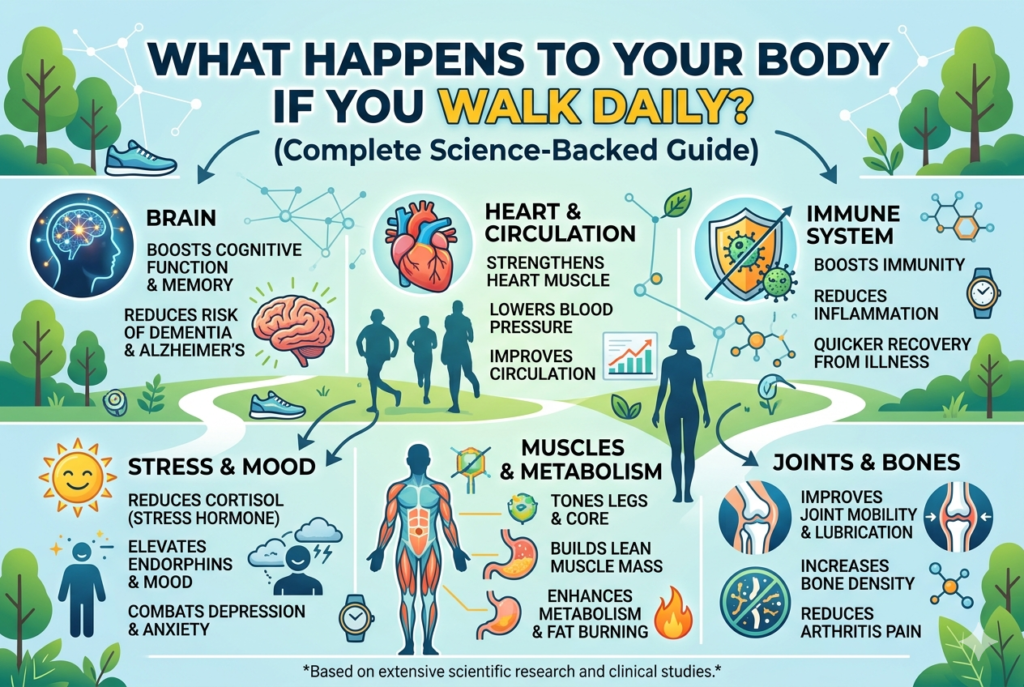
Walking regularly strengthens your cardiovascular system and keeps your heart functioning efficiently.
When you walk daily:
- Blood circulation improves
- Heart muscles become stronger
- Blood pressure stabilizes
- Risk of heart disease reduces
Even a 30-minute brisk walk can significantly lower your risk of heart-related issues over time.
2. Supports Sustainable Weight Loss Without Extreme Dieting
👉How walking daily helps in weight loss naturally
Walking may seem simple, but it plays a key role in burning calories and maintaining a healthy weight.
Daily walking helps:
- Burn calories consistently
- Increase metabolism
- Reduce overall body fat
- Prevent unhealthy weight gain
Unlike crash diets, walking promotes slow, sustainable fat loss—which is more effective long-term.
3. Helps Reduce Belly Fat Over Time
👉Does walking daily reduce belly fat
Belly fat is one of the hardest to lose, but walking can help when done consistently.
Walking works by:
- Improving fat metabolism
- Activating core muscles
- Reducing visceral fat (fat around organs)
4. Boosts Mental Health and Reduces Stress
👉 Walking daily benefits for mental health and stress relief
Walking is not just physical exercise—it’s mental therapy.
Daily walking:
- Reduces stress hormones like cortisol
- Improves mood and emotional balance
- Helps reduce anxiety and depression
- Enhances focus and mental clarity
Even a 20-minute walk outdoors can instantly refresh your mind.
5. Improves Digestion and Gut Health
👉Walking after meals benefits for digestion
A short walk after meals can do wonders for your digestive system.
It helps:
- Speed up digestion
- Reduce bloating and gas
- Improve gut movement
- Stabilize blood sugar levels
This is why many experts recommend a 10–15 minute walk after eating.
6. Strengthens Muscles and Improves Joint Health
👉Walking for joint pain relief and muscle strength
Walking keeps your body active without putting excessive stress on joints.
Benefits include:
- Stronger leg muscles
- Improved flexibility
- Better joint mobility
- Reduced stiffness and pain
It’s especially beneficial for people with sedentary lifestyles or mild joint issues.
7. Helps Control Blood Sugar Levels
👉 Daily walking benefits for diabetes control
Walking plays a crucial role in managing blood sugar levels.
It helps:
- Improve insulin sensitivity
- Reduce post-meal sugar spikes
- Lower risk of type 2 diabetes
Even light walking after meals can significantly improve glucose control.
8. Enhances Sleep Quality Naturally
👉 Walking daily for better sleep quality
If you struggle with sleep, walking can help regulate your body clock.
Walking daily:
- Helps you fall asleep faster
- Improves deep sleep quality
- Reduces insomnia symptoms
Consistency is key—your body adapts to a regular rhythm.
9. Increases Energy Levels Throughout the Day
👉Does walking increase energy levels
Walking might seem tiring, but it actually boosts your energy.
It works by:
- Improving oxygen flow in the body
- Enhancing blood circulation
- Reducing fatigue
- Keeping you mentally alert
A short walk during work breaks can instantly refresh you.
10. Supports Longevity and Healthy Aging
👉 Walking daily benefits for long life and healthy aging
Walking daily is strongly linked to a longer, healthier life.
It helps:
- Maintain physical fitness
- Slow down aging-related decline
- Keep organs functioning efficiently
- Improve overall quality of life
It’s one of the simplest habits for long-term health and longevity.
How Much Should You Walk Daily?
- Beginners: 20–30 minutes daily
- Ideal goal: 7,000–10,000 steps
- Advanced: 45–60 minutes brisk walking
👉 Consistency matters more than intensity.
Best Time to Walk for Maximum Benefits
- Morning: Boosts metabolism and energy
- After meals: Improves digestion and sugar control
- Evening: Reduces stress and improves sleep
Choose a time you can stick to consistently.
Common Mistakes to Avoid While Walking
- Skipping warm-up
- Poor posture
- Wearing uncomfortable shoes
- Walking inconsistently
- Ignoring hydration
Avoiding these mistakes ensures better results and prevents injury.
Final Thoughts
Walking daily is one of the easiest and most effective habits you can build for your health.
It improves your heart, helps with weight management, boosts mental health, and supports long-term wellness.
The best part?
You can start today—no equipment, no cost, no excuses.
Stay consistent, and your body will reward you over time.
FAQs
1. How long should I walk daily to see results?
You can start noticing benefits within 2–4 weeks if you walk at least 30 minutes daily.
2. Is walking enough for weight loss?
Yes, especially when combined with a balanced diet. It helps create a calorie deficit naturally.
3. Can walking reduce belly fat?
Yes, with consistency. Walking reduces overall body fat, which eventually reduces belly fat.
4. Is it better to walk in the morning or evening?
Both are beneficial. Morning boosts energy, while evening helps relaxation and digestion.
5. How many steps should I walk daily?
Aim for 7,000–10,000 steps per day, depending on your fitness level.
Table of Contents
I hope this What Happens to Your Body When You Walk Daily? (10 Science-Backed Benefits) is useful for you to understand the walking benefits you can read our below mention articles also for more health related informative tips: